NATO fleet replacements:
optimal timing
I chaired the NATO task group Systems and Studies Analysis - 099 from 2012 to 2016 in which I led analysts from five NATO nations. Each member state contributed fleet data and analysis time for the study. I pioneered a real options method to determine the optimal fleet replacement date, effectively turning the problem into a financial derivative.
NATO Science and Technology Board
2016 NATO Science and Technology Scientific Achievement Award
Tim Jefferis, Defence Science and Technology Laboratory, UK
“This is a vital step in transforming a theoretical concept into a practical, usable management tool.“
Allan R Shaffer, Director of NATO Science and Technology Collaboration Support Office
“...exceptional effort in significant STO activities, excellence in originality and technical content...outstanding results in terms of military benefit.”
Scientific leadership at NATO: Systems and Studies Analysis (SAS-099) on the economics of fleet replacement
In 2012, the NATO Science and Technology Board appointed me as the chairman of NATO SAS-099 on the economics of fleet replacement. SAS-099 was a study dedicated to understanding how uncertainty in both military operational tempo and economic conditions affects fleet replacement timings. The effects of uncertainty in military fleet replacement rests largely in the irreversibility of the decision. That is, once a fleet replacement decision is reached, reversing the decision is nearly impossible regardless of the arrival of unanticipated unfavourable circumstances. In effect, a military fleet replacement decision turns into determining the optimal exercise conditions of an American style option. Fleet replacement decisions contain two important features: the first is capability improvement or obsolescence, and the second is the expected cost savings from operating a new fleet. When expected cost savings form an important feature in the decision, we need to properly understand the information flow from the current fleet in the form of maintenance cost drivers, supply chain issues, and maintenance load. These pieces of information, when used correctly, can help relieve the decision tension by balancing transient cost fluctuations with underlying trends. The real options analysis generates an optimal replacement barrier in a cost per utility (capability) space that once reached triggers replacement.
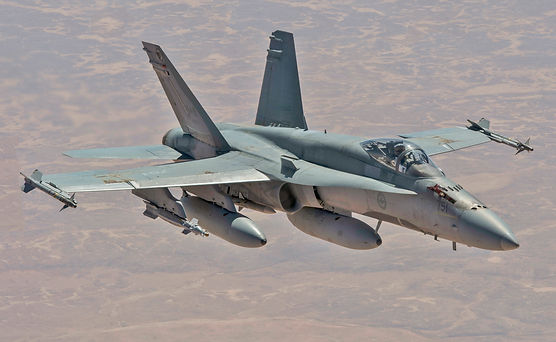
SAS-099 was a collaboration between Canada, the United States, the United Kingdom, the Netherlands and Sweden. We analyzed three fleets: the Canadian CF-18 fleet, the Swedish C-130 fleet, and the American US Army AH-64 Apache attack helicopter fleet. We applied our model, with each of these fleets as an exemplar. We extended the Greenfield-Persselin model developed at Rand in 2002. Our real options model uses both frequentist and Bayesian methods to estimate the replacement barrier that gives the decision maker ranges of confidence that the fleet's cost per utility trajectory has crossed into the stop-holding region. Our mathematical approach ring fences the real world replacement decision, giving military leadership an ability to the estimate excess costs of holding a fleet past the best-before date. My application of this method informed the highest level of the Canadian government on the CF-18 replacement decision.
To advance NATO SAS 099, I had the opportunity to leverage the Canada-U.S. operational research symposium, which directly involves the Center for Army Analysis in Virginia. I was invited to teach real options methods at Fort Belvoir to the US Army's operations research team. SAS 099 won the NATO Science and Technology Scientific Achievement Award for 2016 for exceptional effort, originality in scientific content, and the quality and degree of international collaboration.
My interview with NATO's Science and Technology Organization

The optimal replacement time for the military fleet occurs at the point where cost per utility (capability) crosses the barrier. I inferred the barrier using drift-diffusion methods with an open boundary technique from dynamic programming. The confidence (frequentist) and credible (Bayesian) intervals show the uncertainty of the barrier's location, and therefore the probability crossing.